What is rotomoulding?
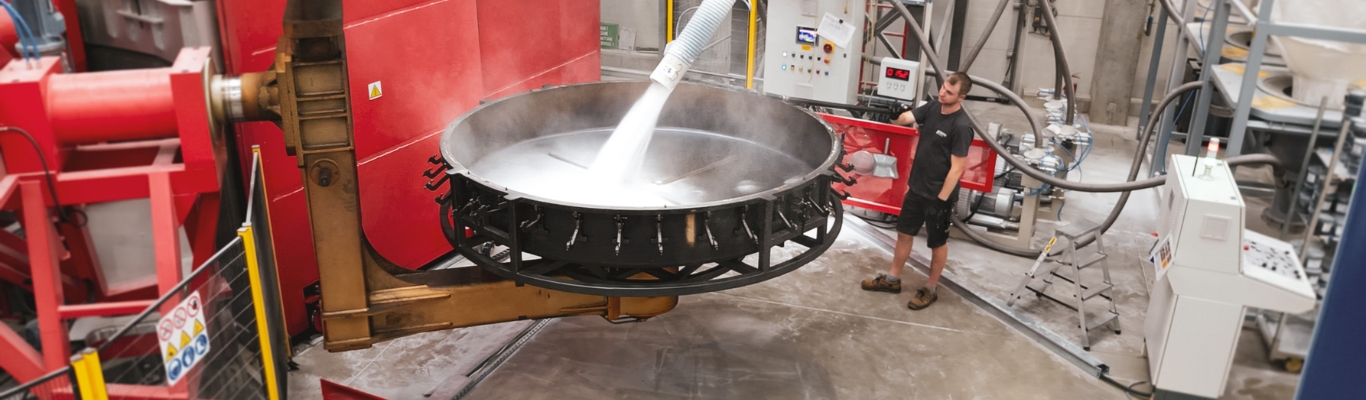
Rotomoulding, also known as rotational moulding, is a technology with a history dating back just over a century, though its development only truly accelerated in the second half of the 20th century. The earliest concepts of rotational moulding emerged in the 19th century and were used to produce food items, like chocolate, or ceramics, where moulds were rotated to achieve an even surface coating.
It wasn't until the 1950s that this technology began to be used for moulding plastic products. The breakthrough came with the introduction of polyethylene—a lightweight, durable, and weather-resistant material—which enabled the manufacturing of long-lasting, yet relatively inexpensive, large-scale products.
During the 1960s and 1970s, rotomoulding gained popularity in the United States and Europe, and its applications began to expand beyond industrial sectors. Over time, this method became the preferred technology for manufacturing large objects with complex shapes, such as fuel or water tanks, as well as various types of industrial containers.
The popularity of this technology stemmed primarily from its low production costs compared to traditional injection moulding—especially for larger items and low-volume production runs.
At Fortis Technology, we began our journey with rotomoulding over 30 years ago.
Surprising applications of rotomoulding
While rotomoulding is mainly associated with large tanks, its capabilities are surprisingly broad.
For instance, the film and set design industry utilizes this technology to create large decorations and props that are lightweight yet durable. Even NASA has tested rotomoulded products to verify their resilience against extreme temperatures and vibrations. Interestingly, many urban playgrounds and art installations are also crafted using the rotational moulding method.
Future outlook for Rotomoulding
Today, alongside the growing demand for eco-friendly materials, there is increasing pressure on the industry to find environmentally sustainable solutions. In response, manufacturers are developing biodegradable and recyclable polymer blends that can be used in rotomoulding. There is also significant potential in process automation—the advancement of sensor technologies and machine learning will allow for even more precise quality control and material savings.
Dynamic Growth
Rotomoulding is predicted to remain one of the leading technologies, particularly in the industrial and agricultural sectors, due to its flexibility and cost-effectiveness. In the coming years, we can also expect greater diversity in product shapes and functionalities, as well as a wider use of composites, which will allow for the creation of even more durable and versatile products. Modern digital technologies, such as 3D printing for manufacturing complex moulds, may soon become an integral part of the rotomoulding process, opening up completely new opportunities in the market.
Summary
The history of rotomoulding is a fascinating journey from simple products to advanced solutions used across various industrial sectors. This flexible and environmentally friendly technology continues to evolve, offering increasingly innovative products. As a result, rotational moulding has every opportunity to firmly secure its place in the future of industry and everyday life.